
Introduction
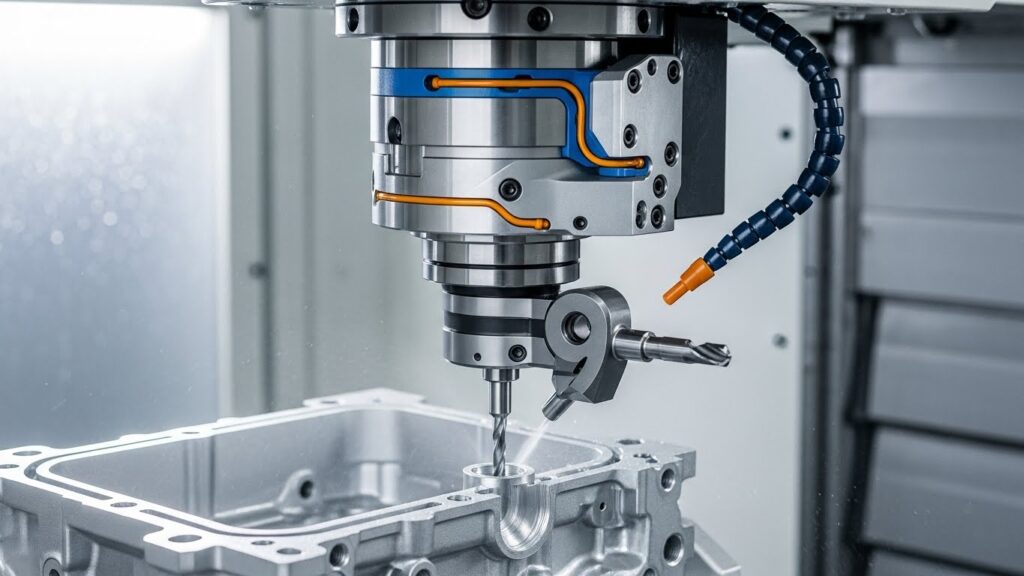
In the world of precision machining and manufacturing, accessibility often determines the success or failure of a drilling operation. The Winkelbohrspindel, or angle drilling spindle, has emerged as an indispensable tool for machinists who need to reach challenging angles and confined spaces that standard drilling equipment simply cannot access. These specialized spindles redirect the drilling axis, typically at 90 degrees, allowing operators to perform accurate boring, drilling, and milling operations in areas that would otherwise require complex workpiece repositioning or specialized machinery.
The Winkelbohrspindel represents decades of engineering innovation designed to solve one of manufacturing’s most persistent challenges: how to maintain precision while working in spatially constrained environments. From aerospace component fabrication to automotive engine manufacturing, these angle spindles have become essential equipment in facilities where efficiency and accuracy cannot be compromised. Modern Winkelbohrspindel units combine robust construction with sophisticated bearing systems, enabling them to handle substantial loads while maintaining the micron-level precision that contemporary manufacturing demands. Whether you’re drilling perpendicular holes in cylindrical workpieces or accessing recessed areas on complex castings, understanding the capabilities and applications of angle drilling spindles can dramatically expand your machining capabilities and reduce production time.
Understanding the Mechanics of Winkelbohrspindel Technology
The fundamental engineering behind a Winkelbohrspindel involves a precisely manufactured gear system that redirects rotational energy from the machine spindle through a 90-degree angle. High-quality angle drilling spindles incorporate bevel gears or worm gears made from hardened steel alloys, ensuring durability under continuous operational stress. These transmission systems must maintain exceptional precision because any deviation amplifies at the cutting edge, potentially compromising hole accuracy. The housing typically features robust construction from aluminum alloys or cast iron, providing the rigidity necessary to resist deflection during heavy cutting operations while keeping the overall weight manageable for operator handling and machine tool compatibility.
Inside the Winkelbohrspindel, multiple bearing sets support the output shaft, with angular contact bearings being the preferred choice for handling both radial and axial loads simultaneously. Premium models incorporate preloaded bearing arrangements that eliminate play and ensure consistent performance throughout the spindle’s service life. The cooling system represents another critical mechanical element—many industrial-grade angle spindles feature integrated coolant delivery channels that direct cutting fluid precisely to the tool tip, improving chip evacuation and extending tool life. The input shaft connects to the machine tool through standardized tapers such as Morse, R8, or CAT configurations, while the output accepts standard drill chucks or direct tool mounting systems depending on the application requirements.
Read More: 7184759748
Key Applications Across Manufacturing Industries
The versatility of a Winkelbohrspindel makes it valuable across numerous industrial sectors, with aerospace manufacturing representing one of the most demanding application environments. Aircraft structural components often feature complex geometries with holes that must be drilled at precise angles relative to primary surfaces—tasks where angle drilling spindles excel. Engine nacelles, wing spar assemblies, and landing gear components frequently require perpendicular drilling operations on curved or cylindrical surfaces, making the Winkelbohrspindel an essential tool for maintaining production schedules while meeting stringent aerospace quality standards. The ability to perform these operations without repositioning heavy workpieces saves countless hours and reduces the risk of cumulative positioning errors.
Automotive manufacturing presents equally compelling use cases for angle drilling spindles, particularly in engine block and transmission housing production. These components feature numerous intersecting passages for lubrication, coolant circulation, and fastener access that challenge conventional drilling methods. A properly configured Winkelbohrspindel enables machinists to drill cross-holes in crankshaft journals, create perpendicular cooling passages in cylinder heads, and access bolt holes in confined transmission cavities—all while the workpiece remains securely fixtured in a single setup. The medical device industry also relies heavily on these spindles for producing surgical instruments and implant components where precision matters immensely. Orthopedic implants, for instance, often require precisely angled holes for locking screws, and the Winkelbohrspindel provides the accuracy needed to meet FDA manufacturing requirements and ensure patient safety.
Selecting the Right Winkelbohrspindel for Your Operation
Choosing an appropriate Winkelbohrspindel requires careful evaluation of several technical specifications aligned with your specific machining requirements. The power rating, typically measured in horsepower or kilowatts, determines the spindle’s capability to handle different materials and cutting conditions—lightweight models might suffice for aluminum fabrication, while steel or titanium machining demands robust units with higher torque capacity. Speed range represents another crucial consideration, as different materials and tool diameters require specific RPM ranges for optimal cutting performance. Many professional-grade angle drilling spindles offer variable speed capability through gear selection, providing flexibility across diverse applications without requiring multiple specialized tools.
The tool holding system compatibility affects both the convenience and capability of your Winkelbohrspindel investment. Models equipped with keyless drill chucks offer quick tool changes and adequate gripping force for standard drilling operations, while spindles with threaded nose configurations or taper mounting systems provide superior rigidity for demanding boring or reaming applications. Physical dimensions matter considerably when working in confined spaces—measure the maximum envelope your application can accommodate, including both the spindle body and any required tooling extension. Coolant delivery capability separates professional-grade equipment from basic models, as through-spindle coolant dramatically improves performance in deep hole drilling and tough material applications. Quality manufacturers provide technical specifications including maximum thrust capacity, runout tolerances, and bearing life expectations, enabling informed decisions based on your production volume and precision requirements.
Installation and Setup Best Practices
Proper installation of a Winkelbohrspindel begins with verifying compatibility between the spindle’s input taper and your machine tool’s existing spindle configuration. Clean both the machine taper and the Winkelbohrspindel mounting surface meticulously, removing any chips, coolant residue, or protective coatings that could prevent complete seating. Even microscopic contamination between mating tapers creates instability that manifests as vibration, poor surface finish, and premature tool wear. After inserting the angle spindle into the machine taper, secure it according to the manufacturer’s specifications—this might involve a drawbar for pull-stud systems or a retention knob for automatic tool changers. Apply the recommended torque values precisely, as insufficient tightening allows movement during operation while excessive force can damage taper surfaces or deform the spindle housing.
Alignment verification represents a critical setup step that many operators unfortunately skip, yet it profoundly impacts drilling accuracy and tool life. Use a precision dial indicator to check that the Winkelbohrspindel output shaft runs true, with runout ideally below 0.001 inches for demanding applications. If excessive runout exists, remove and reinstall the spindle, checking for contamination or damage to mating surfaces. Once mounted securely, select appropriate speeds and feeds based on the workpiece material, tool diameter, and desired hole quality—consult cutting tool manufacturer recommendations as a starting point, then adjust based on observed performance. Program your machine tool to approach the workpiece gradually, particularly when initiating cuts on curved or angled surfaces where the drill point might wander before establishing full engagement. Establish proper coolant flow before commencing operations, ensuring adequate chip evacuation and heat dissipation throughout the cutting cycle.
Maintenance Requirements for Extended Service Life
A comprehensive maintenance regimen significantly extends Winkelbohrspindel operational life while maintaining the precision that justifies the initial investment. Daily maintenance should include external cleaning to remove accumulated chips and coolant residue, paying particular attention to the input taper which must remain pristine for reliable mounting. Inspect coolant delivery ports for blockages, as impaired coolant flow accelerates tool wear and increases the risk of thermal damage to spindle bearings. Check all external fasteners for tightness, as vibration during operation gradually loosens bolts that secure housing components or mounting brackets. Even seemingly minor looseness compromises rigidity and creates conditions for accelerated wear throughout the mechanical system.
Weekly or monthly maintenance intervals, depending on usage intensity, should incorporate more thorough inspection procedures. Monitor bearing condition by listening for unusual noise—smooth, quiet operation indicates healthy bearings while grinding sounds or roughness suggest contamination or wear requiring professional attention. Check the gear mechanism for proper lubrication level, topping up with manufacturer-specified lubricant if needed, but avoid overfilling which creates unnecessary resistance and heat generation. Measure runout periodically using precision indicators, establishing a performance baseline when the Winkelbohrspindel is new and tracking any degradation over time. Progressive increases in runout indicate bearing wear, gear damage, or housing distortion requiring corrective action before catastrophic failure occurs. Professional rebuild services can restore worn angle drilling spindles to like-new condition at a fraction of replacement cost, making systematic maintenance tracking economically advantageous for facilities with multiple Winkelbohrspindel units in regular service.
Troubleshooting Common Winkelbohrspindel Issues
When a Winkelbohrspindel produces oversized or out-of-round holes despite proper setup, the root cause typically involves excessive runout or inadequate rigidity during the cutting operation. Begin troubleshooting by checking tool installation in the spindle’s output chuck or collet, ensuring complete seating and proper tightening. Worn chuck jaws or damaged collets allow tool movement that creates dimensional inaccuracies and poor hole geometry. If the tooling checks acceptable, examine the spindle mounting in the machine tool taper, looking for contamination, wear, or incomplete seating that permits movement under cutting loads. Temperature-related expansion sometimes creates taper fit issues, particularly when cold tooling enters a warm machine spindle, so allow thermal stabilization before precision operations.
Unusual noise or vibration during Winkelbohrspindel operation signals problems requiring immediate investigation to prevent catastrophic failure. Intermittent rattling often indicates loose internal components such as gears with excessive backlash or bearings that have lost preload. Continuous grinding noises suggest bearing contamination or inadequate lubrication causing metal-to-metal contact within the bearing races. Temperature monitoring provides additional diagnostic information—excessive heat generation points toward bearing problems, gear mesh issues, or insufficient coolant flow. Power consumption increases similarly indicate mechanical problems creating additional friction within the spindle assembly. When addressing these issues, never continue operating a malfunctioning Winkelbohrspindel in hopes that problems will resolve spontaneously. Progressive damage occurs rapidly in precision mechanical systems, and continued operation converts what might have been a simple bearing replacement into a complete spindle rebuild requiring extensive downtime and expense.
Advanced Techniques for Maximizing Winkelbohrspindel Performance
Experienced machinists employ several advanced techniques to extract maximum capability from their Winkelbohrspindel equipment. Peck drilling cycles prove particularly valuable when working with angle spindles, as the periodic retraction evacuates chips more effectively than continuous feeding, preventing chip packing that causes tool breakage and dimensional inaccuracies. Program the peck depth based on hole diameter and material characteristics—typically between 2 to 5 times the drill diameter for most applications. This approach becomes especially critical in deep hole operations where the extended tool length and angled orientation make chip evacuation naturally more challenging than vertical drilling. High-pressure coolant systems, when available, can deliver cutting fluid at pressures exceeding 1000 PSI, dramatically improving chip clearing in demanding applications.
Custom tooling configurations expand Winkelbohrspindel capabilities beyond standard drilling operations. Boring heads mounted in the angle spindle output enable precision hole sizing and superior surface finish compared to drilling alone. This technique works exceptionally well for creating accurate bearing bores or fitting holes where dimensional tolerances measure in tenths of thousandths. Specialized chamfering tools remove sharp edges efficiently after drilling, eliminating secondary operations that require workpiece repositioning. Some innovative manufacturers offer offset tool holders that mount in the Winkelbohrspindel output, creating additional positioning options for accessing extremely confined spaces. These adapters essentially convert the 90-degree angle spindle into a variable angle tool capable of reaching around obstacles that would otherwise require complex fixturing solutions. Understanding these advanced applications transforms the Winkelbohrspindel from a simple right-angle drilling tool into a versatile problem-solving implement that enhances manufacturing flexibility and reduces production costs across diverse applications.
Conclusion
The Winkelbohrspindel stands as a testament to precision engineering’s ability to solve complex manufacturing challenges through elegant mechanical solutions. These angle drilling spindles have evolved from simple right-angle attachments into sophisticated tools capable of delivering exceptional accuracy and reliability in the most demanding production environments. Understanding the mechanical principles underlying Winkelbohrspindel operation, selecting appropriate specifications for your applications, and implementing comprehensive maintenance practices ensures these valuable tools deliver maximum return on investment throughout extended service lives.
As manufacturing continues advancing toward more complex geometries and tighter tolerances, the role of specialized tooling like the Winkelbohrspindel becomes increasingly important. Whether you’re drilling cross-holes in automotive components, creating access passages in aerospace assemblies, or producing precision medical devices, these angle spindles provide capabilities that would be difficult or impossible to achieve through other means. Investing in quality Winkelbohrspindel equipment, training operators in proper setup and application techniques, and establishing systematic maintenance protocols creates a foundation for manufacturing excellence that pays dividends through improved productivity, enhanced quality, and reduced operational costs.