
Introduction
When working with industrial control systems and automated equipment, encountering error codes can disrupt operations and create frustration for technicians and operators alike. Among the various diagnostic messages that professionals encounter, HCS 411GITS error codes represent a specific category of system alerts that require immediate attention and proper understanding. These error codes serve as the communication bridge between your equipment and its users, providing critical insights into what’s malfunctioning and how to address it effectively. Whether you’re a seasoned maintenance technician, a facility manager, or an operator responsible for daily equipment monitoring, understanding these error codes is essential for maintaining operational efficiency and minimizing costly downtime.
The HCS 411GITS system, utilized across manufacturing facilities, processing plants, and industrial environments, generates specific error codes when it detects anomalies in performance, communication failures, or hardware malfunctions. These codes aren’t arbitrary—each one corresponds to a particular issue within the system’s architecture, ranging from simple sensor disconnections to complex processor failures. Recognizing and interpreting HCS 411GITS error codes promptly can mean the difference between a quick fix and an extended production halt that impacts your bottom line.
Many professionals struggle with error code interpretation because documentation can be sparse, technical jargon overwhelming, or troubleshooting resources scattered across multiple platforms. This comprehensive guide demystifies the most common HCS 411GITS error codes, explains their root causes, and provides actionable solutions that you can implement immediately. We’ll explore everything from basic diagnostic procedures to advanced troubleshooting techniques, ensuring you have the knowledge necessary to handle these errors confidently. By the end of this article, you’ll understand not only how to resolve current issues but also how to implement preventive measures that reduce the frequency of these errors in your operations.
What Are HCS 411GITS Error Codes?
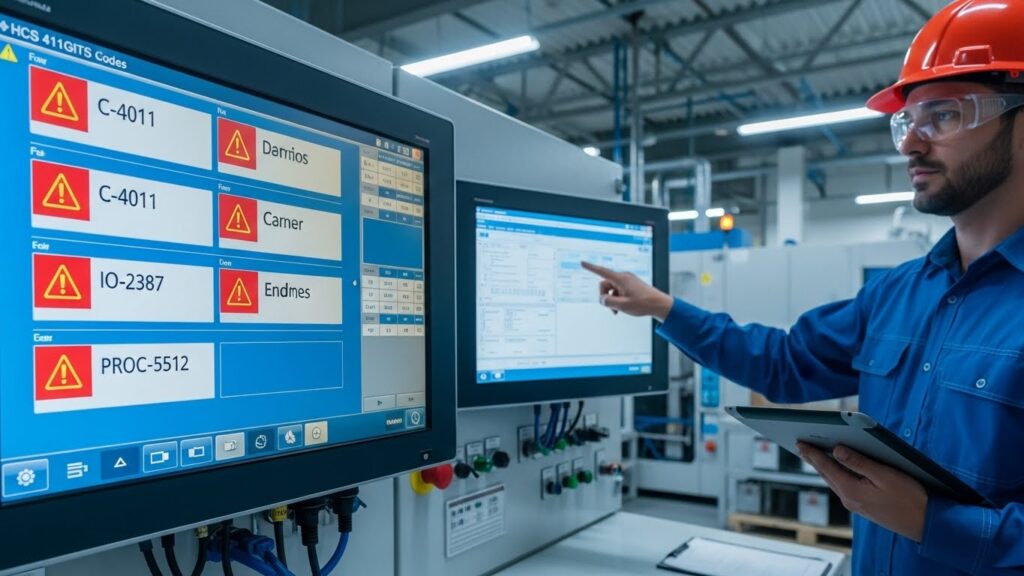
HCS 411GITS error codes are alphanumeric diagnostic messages generated by the HCS 411GITS control system when it identifies operational irregularities or system faults. These codes function as a diagnostic language, translating complex internal processes into identifiable markers that technicians can reference for troubleshooting. The system continuously monitors various parameters including input signals, output responses, communication pathways, and internal processing functions. When any of these parameters deviate from their expected ranges or fail to respond appropriately, the system triggers a specific error code. These codes typically appear on the human-machine interface (HMI), control panel display, or within the system’s diagnostic logs, providing real-time feedback about the equipment’s health status.
Understanding the structure of these error codes is fundamental to effective troubleshooting. Most HCS 411GITS error codes follow a standardized format that includes category identifiers, severity levels, and specific fault locations within the system architecture. For example, codes might begin with letters indicating the affected subsystem—such as “C” for communication errors, “P” for processor-related issues, or “I” for input/output problems—followed by numerical sequences that pinpoint the exact nature and location of the fault. This hierarchical structure allows technicians to quickly narrow down potential causes without exhaustively checking every component. The system’s ability to self-diagnose and communicate these issues through standardized error codes significantly reduces troubleshooting time, enabling maintenance teams to address problems before they escalate into major failures that could halt production entirely.
Read More: B06X95MVYN
Common Categories of HCS 411GITS Error Codes
The HCS 411GITS system organizes error codes into several distinct categories, each representing different aspects of system functionality. Communication errors represent one of the most frequent categories, occurring when data transmission between system components fails or becomes corrupted. These errors might involve network connectivity issues, protocol mismatches, or physical cable problems that interrupt the flow of information. Another significant category includes input/output errors, which arise when sensors, actuators, or other peripheral devices fail to send or receive signals correctly. These might result from faulty wiring, damaged sensors, or configuration mismatches between the controller and connected devices. Power-related error codes form another critical category, alerting users to voltage irregularities, power supply failures, or battery backup issues that could compromise system stability.
Processor and memory errors constitute a more serious category of HCS 411GITS error codes, indicating potential problems with the system’s computational core. These errors might manifest when the processor encounters corrupted data, experiences overload conditions, or detects memory corruption that affects program execution. Configuration errors represent another common category, typically appearing after system updates, parameter changes, or when newly installed components haven’t been properly integrated into the existing setup. Finally, mechanical and hardware errors signal physical component failures such as worn actuators, malfunctioning motors, or degraded mechanical parts that prevent the system from executing commands properly. Recognizing which category an error code belongs to immediately directs troubleshooting efforts toward the appropriate subsystem, saving valuable diagnostic time and helping technicians select the right tools and expertise for resolution.
Diagnosing Communication Error Codes
Communication error codes within the HCS 411GITS system indicate breakdowns in data exchange between various system components, networks, or external devices. These errors frequently appear as codes beginning with “C” or “COMM” followed by specific numerical identifiers that pinpoint where the communication failure occurred. Common causes include physical disconnections, damaged cables, network congestion, or incompatible communication protocols between devices. When diagnosing these errors, technicians should begin by verifying all physical connections, checking for loose connectors, damaged cables, or improperly terminated network lines. Visual inspection often reveals obvious problems like severed wires or corroded connection points that compromise signal integrity. Additionally, checking network settings including baud rates, IP addresses, subnet masks, and gateway configurations ensures that all devices are attempting to communicate using compatible parameters.
Advanced diagnosis of communication errors involves using specialized diagnostic tools to monitor data traffic and identify where communication breaks down. Network analyzers can capture and display data packets, revealing whether information is being transmitted correctly or if corruption occurs during transmission. The HCS 411GITS system often includes built-in diagnostic functions that test communication pathways, sending test signals to verify connectivity and measuring response times to identify bottlenecks or latency issues. When multiple devices share the same communication network, bandwidth limitations or excessive traffic can trigger error codes even when physical connections are sound. In such cases, network optimization strategies like reducing polling frequencies, implementing traffic prioritization, or upgrading to higher-bandwidth communication protocols can resolve persistent issues. Documentation of communication error patterns—including when they occur, their frequency, and any environmental factors present during failures—provides valuable insights that help identify intermittent problems that might not be immediately apparent during standard diagnostic procedures.
Resolving Input/Output Error Codes
Input/output error codes in the HCS 411GITS system signal problems with sensors, actuators, switches, or other peripheral devices that provide data to or receive commands from the controller. These errors typically manifest when the system expects a signal that never arrives, receives unexpected values outside acceptable ranges, or detects short circuits or open circuits in connected devices. The first step in resolving I/O error codes involves identifying exactly which input or output channel is affected, information typically provided within the error code itself or accessible through the system’s diagnostic interface. Once identified, technicians should perform voltage measurements at the device terminals to verify that proper power is reaching sensors and that output signals are being generated correctly by the controller. Multimeter readings that deviate significantly from expected values indicate wiring problems, power supply issues, or device failures requiring repair or replacement.
Beyond electrical verification, resolving I/O errors often requires examining the physical condition and placement of sensors and actuators. Environmental factors like temperature extremes, moisture exposure, vibration, or chemical contamination can degrade device performance over time, causing intermittent or permanent failures that trigger HCS 411GITS error codes. For example, a temperature sensor exposed to excessive heat might drift beyond its calibrated range, reporting values that the system flags as erroneous. Similarly, mechanical switches subjected to constant vibration might develop contact issues that create unreliable signals. Calibration verification represents another crucial aspect of I/O troubleshooting—devices that are electrically functional but improperly calibrated will generate error codes because their output doesn’t match the system’s expected values. Regular calibration schedules, proper device mounting to minimize vibration, environmental protection through appropriate enclosures, and using devices rated for your specific operating conditions all contribute to reducing I/O-related error codes and extending equipment lifespan significantly.
Addressing Processor and Memory Errors
Processor and memory errors represent some of the most critical HCS 411GITS error codes because they affect the system’s core computational functions. These errors might indicate corrupted program files, memory chip failures, excessive processing loads, or software bugs that cause the processor to malfunction. When these error codes appear, immediate action is necessary because continued operation could lead to unpredictable system behavior, incorrect outputs, or complete system crashes that halt production. Initial troubleshooting should involve reviewing recent changes to the system—new programs uploaded, parameter modifications, or software updates—as these often introduce instabilities that manifest as processor errors. Reverting to the last known good configuration frequently resolves issues if recent changes caused the problem, though this requires maintaining proper backup procedures and version control for all system programs.
If configuration rollback doesn’t resolve processor or memory errors, deeper investigation becomes necessary. Memory errors specifically might result from physical hardware degradation, particularly in systems operating in harsh environments where temperature cycling and vibration stress electronic components. Running built-in memory diagnostic routines helps identify specific memory locations that are failing, allowing targeted replacement of faulty modules rather than entire controller units. Processor errors related to program execution might stem from corrupted logic, infinite loops, or calculations that exceed the processor’s capabilities. Careful program review, simulation testing in offline environments, and implementing error-handling routines within the control logic itself can prevent many processor-related error codes. Additionally, ensuring adequate processor cycle time by optimizing program efficiency, reducing unnecessary calculations, and distributing processing loads across multiple controllers when possible prevents overload conditions. For persistent memory or processor errors that resist conventional troubleshooting, consulting with the system manufacturer’s technical support or authorized service providers ensures access to specialized diagnostic tools and expertise that can identify subtle hardware or firmware issues requiring factory repair or replacement.
Power-Related Error Codes and Solutions
Power-related HCS 411GITS error codes alert users to voltage irregularities, supply failures, or backup battery issues that threaten system stability and data integrity. These codes are particularly critical because power problems can cause cascading failures affecting multiple system components simultaneously. Common power error codes indicate conditions like undervoltage (insufficient voltage reaching the system), overvoltage (excessive voltage that could damage components), voltage fluctuations (unstable power supply), or backup battery failures that compromise the system’s ability to maintain memory and critical functions during power outages. Diagnosing power errors begins with measuring actual voltage levels at various points within the system using accurate multimeters or power analyzers, comparing these measurements against the manufacturer’s specified operating ranges typically found in technical documentation.
Resolving power-related errors often requires examining the entire power supply chain from the main electrical service through transformers, circuit breakers, and power supplies to the controller itself. Loose connections at terminal blocks, corroded contacts, or undersized wiring that creates excessive voltage drop under load conditions frequently cause power errors even when the primary electrical service is adequate. Installing voltage regulators or uninterruptible power supplies (UPS) provides protection against voltage fluctuations and temporary power losses that trigger error codes and disrupt operations. For systems with backup batteries, regular testing and timely replacement according to manufacturer recommendations prevents failures that could result in data loss during power interruptions. Environmental factors also play significant roles in power-related errors—excessive heat reduces power supply efficiency and accelerates battery degradation, while electrical noise from nearby motors or welding equipment can introduce voltage transients that the system interprets as power problems. Implementing proper electrical isolation, shielding, and grounding practices, along with locating sensitive control equipment away from high-power electrical devices, substantially reduces power-related HCS 411GITS error codes and enhances overall system reliability.
Preventive Maintenance to Minimize Error Codes
Implementing comprehensive preventive maintenance programs represents the most effective strategy for reducing HCS 411GITS error codes and extending equipment lifespan. Regular maintenance activities catch developing problems before they progress to failures that trigger error codes and disrupt production. A well-structured preventive maintenance schedule should include routine inspections of all physical connections, checking for signs of wear, corrosion, or looseness that could compromise electrical continuity. Thermal imaging surveys identify components operating at elevated temperatures, indicating electrical resistance problems, overloading, or cooling system inadequacies that will eventually cause failures. Cleaning control enclosures to remove dust accumulation prevents overheating and reduces the risk of short circuits caused by conductive debris bridging between components. Periodic calibration of sensors and instruments ensures accuracy and prevents the system from generating error codes due to measurements drifting beyond acceptable tolerances.
Beyond physical maintenance, software and configuration management constitute critical preventive measures. Regularly backing up system programs, configurations, and parameter settings provides quick recovery options when errors occur, minimizing downtime associated with system restoration. Reviewing and analyzing error code logs reveals patterns that indicate developing problems—if certain error codes appear with increasing frequency, even if they clear automatically, they signal conditions requiring investigation before complete failure occurs. Firmware updates released by manufacturers often address known bugs and vulnerabilities that could generate error codes, making it essential to stay current with recommended software versions while testing updates in non-critical environments before full deployment. Training operators and maintenance personnel on proper system operation, error code interpretation, and basic troubleshooting procedures creates a knowledgeable team capable of responding quickly and appropriately when issues arise. Documentation of all maintenance activities, error occurrences, and corrective actions builds an invaluable knowledge base that helps identify recurring problems and evaluate the effectiveness of implemented solutions, continuously improving your maintenance strategy and reducing the frequency and severity of HCS 411GITS error codes over time.
Conclusion
Mastering HCS 411GITS error codes transforms them from frustrating obstacles into valuable diagnostic tools that enhance system reliability and operational efficiency. Throughout this guide, we’ve explored the various categories of error codes, their common causes, and proven troubleshooting methodologies that enable quick identification and resolution of system issues. Whether dealing with communication failures, input/output problems, processor anomalies, or power irregularities, a systematic approach grounded in understanding how these codes function empowers maintenance teams to minimize downtime and maintain productive operations.
The key to success with HCS 411GITS error codes lies not just in reactive troubleshooting but in proactive prevention through comprehensive maintenance programs, continuous monitoring, and building organizational knowledge around these systems. By documenting error patterns, implementing regular maintenance schedules, and investing in operator training, facilities can significantly reduce error frequency while improving response times when issues do occur. Remember that every error code represents an opportunity to learn more about your system’s behavior and strengthen your preventive measures. As you apply the strategies outlined in this guide, you’ll develop expertise that not only resolves current issues but anticipates and prevents future problems, ultimately contributing to safer, more reliable, and more profitable operations.